Apollo 17’s Strange Particles: Read the Transcript Before the Theory
The eerie part is real human observation in an unfamiliar environment—not an established alien encounter.
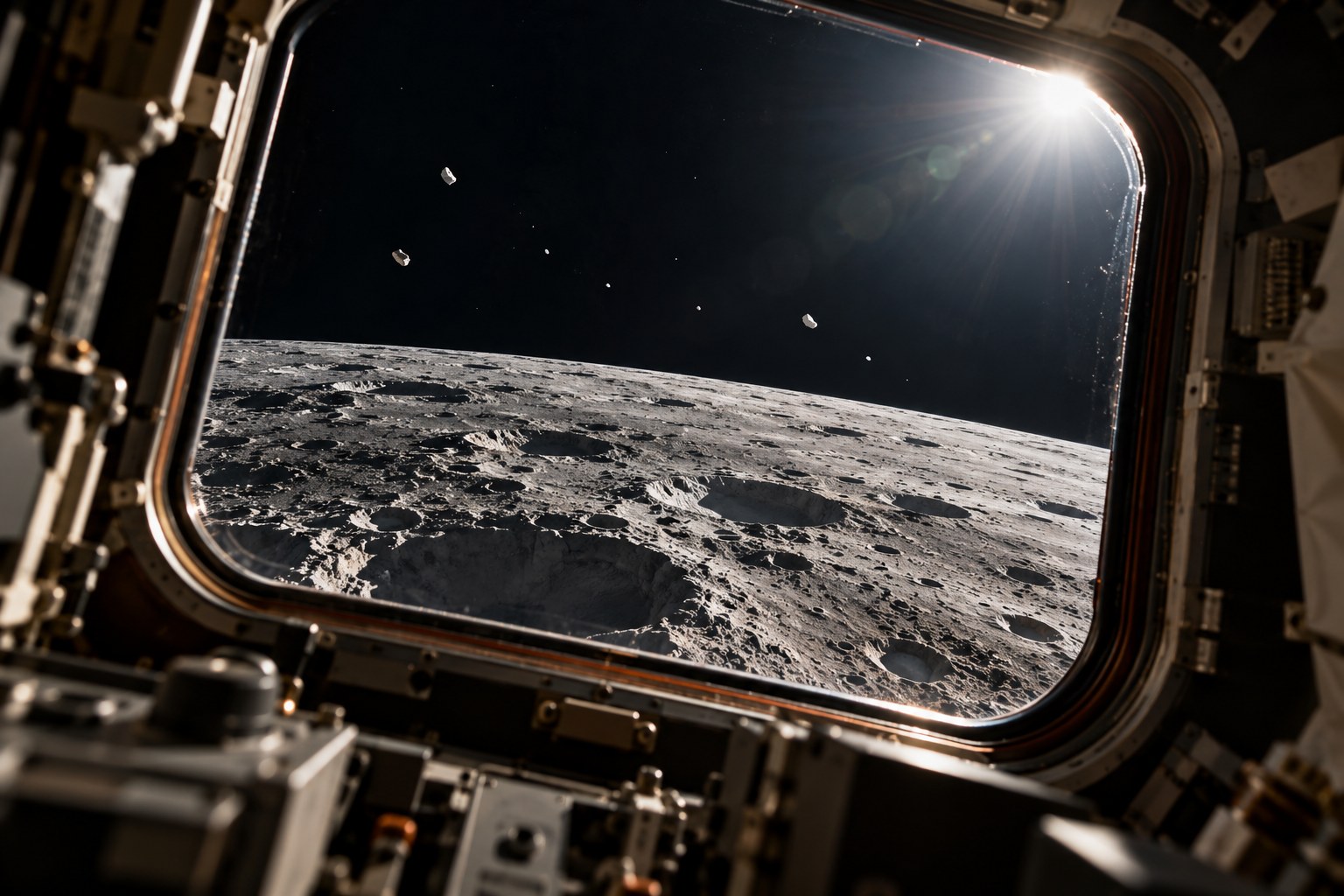
Space can be strange without a visitor
There is something unsettling about astronauts calmly describing unfamiliar lights or fragments while the conversation continues. Apollo 17 transcript material includes descriptions of bright, irregular particles and their movement. The 1972 mission’s communications resurfaced in coverage of the 2026 UFO releases. [1][2] The words are worth reading, but the label on a modern archive should not be allowed to rewrite what the crew actually said.
Stay with the observation
Descriptions of brightness, shape and tumbling are observations. An assertion that the objects were vehicles would be an identification. The gap between those two is where many viral retellings gain their drama. Do not silently promote an astronaut’s description of an unfamiliar feature into a declaration about its origin. A trained observer’s testimony deserves attention precisely because the wording and limits matter.
Read around the highlighted passage
A clipped exchange may omit a question that explains what was being watched or a later discussion of a possible source. The useful next step is to check the surrounding mission time, speaker labels and operational context. Even a routine acknowledgment from the ground does not establish that mission control recognized an alien object, concealed an answer or regarded the observation as unimportant. Those are additional stories layered onto the transcript.
One document can answer only so much
An authentic transcript can establish that an exchange was recorded. It may not establish the distance, composition or origin of what was seen. Explanations involving spacecraft material or environmental effects would need to be tested against the actual event, not asserted because they sound sensible. Likewise, the absence of a firm identification in a short excerpt does not rule out ordinary causes.
Why the restrained version is still compelling
The human story needs no embellishment. People far from Earth were observing, describing and trying to understand their surroundings in real time. Read the archive with that sense of wonder intact. The most interesting question is what the full record allows us to know—and where it stops. Our cover is a fictional Apollo-inspired illustration; it is not a mission photograph or a reconstruction validated against the incident.